EDI vs API in the Supply Chain: Why Enterprise Carriers and Brokers Are Rethinking Integrations
EDI has been part of transportation technology for decades. And despite all the discussion about modernizing integrations, it's not going away anytime soon.
Large shippers depend on it. Enterprise carriers support it. Freight brokers need it to meet customer requirements.
At the same time, APIs have become a key way transportation companies connect their TMS with telematics, visibility platforms, financial systems, and other applications.
That raises a familiar question for transportation and IT leaders: Should we continue investing in EDI, move to APIs, or support both?
For most enterprise operations, the answer is both.
The bigger issue is making those integrations easier to manage.
What Is EDI in Transportation?
Electronic data interchange (EDI) allows organizations to exchange standardized business transactions directly between systems.
Several common EDI transaction sets support everyday transportation operations:
· EDI 204: Motor Carrier Load Tender
· EDI 990: Response to a Load Tender
· EDI 214: Transportation Carrier Shipment Status Message
· EDI 210: Motor Carrier Freight Details and Invoice
These transactions allow shippers, carriers, and brokers to exchange large volumes of information without manually entering the same data into multiple systems.
The challenge is that standardized transactions often come with customer-specific requirements.
One shipper may require particular reference numbers or shipment status codes. Another may have different billing rules or appointment requirements.
Supporting those variations can create substantial configuration and maintenance work.
What Is an API in Logistics?
An application programming interface (API) allows software applications to exchange information or request specific functions.
In transportation, APIs commonly connect a TMS with telematics systems, visibility providers, carrier compliance platforms, and financial applications.
For example, a TMS might receive updated driver availability from an ELD provider or shipment locations from a visibility platform.
APIs are particularly useful when applications need frequent access to specific operational information.
But they're not automatically simpler.
They still require data mapping, authentication, security, monitoring, and processes for handling errors or changes.
An API that delivers inaccurate information faster doesn't improve the operation.
EDI vs API: What's the Difference?
Both technologies support system-to-system communication. The main differences involve their structure and common applications.
Consideration | EDI | API |
|---|---|---|
Primary use | Standardized business transactions | Application data and functions |
Common Examples | Load tenders, status messages, invoices | Telematics, tracking, operational data |
Structure | Established transaction standards | Formats defined by the API |
Timing | Batch, near-real-time, or real-time | On-demand, scheduled, or event-driven |
Flexibility | Standards with partner-specific variations | Depends on the interface design |
One misconception worth addressing is that EDI is necessarily slow and APIs are always real-time.
That's not true.
Both can support timely information exchange depending on how they're designed and implemented.
Why Enterprise Transportation Operations Need Both
Consider a carrier serving a large retail customer.
The retailer sends freight tenders through EDI. The carrier receives those orders in its TMS and assigns drivers and equipment.
During planning, an API connection provides driver hours-of-service information from the carrier's telematics platform.
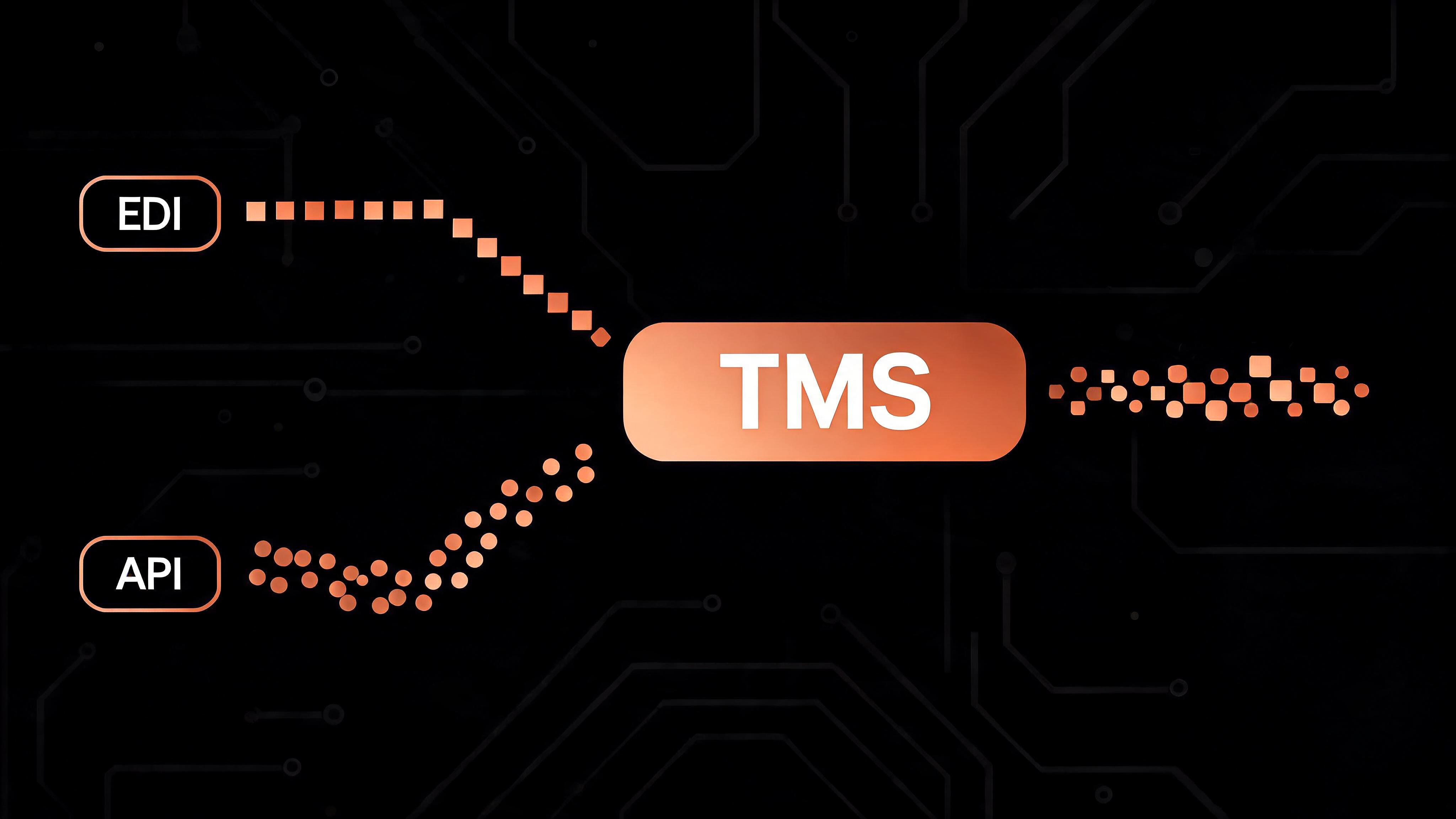
As freight moves, tracking updates reach the TMS through another integration. The TMS then communicates required shipment milestones back to the retailer through EDI.
After delivery, the carrier completes its billing process using the appropriate transaction information.
EDI and APIs are performing different functions within the same workflow.
Replacing EDI wouldn't necessarily improve anything if the customer still requires those transactions.
The Real Challenge Is Managing Exceptions
Integrations tend to look good when everything goes according to plan.
A tender arrives. The carrier accepts it. The freight moves. Delivery is confirmed. The invoice goes out.
The difficult situations happen when something changes.
What if a shipper updates an appointment after dispatch?
What if an incoming transaction conflicts with information a dispatcher already confirmed?
What happens when the same message arrives twice, a required field is missing, or one system becomes unavailable?
These aren't unusual situations. They're part of everyday transportation operations.
A reliable integration strategy needs to account for those exceptions without requiring employees to continually identify and correct problems.
Why Configuration Matters
Enterprise customers often have different requirements for tracking, billing, appointments, and communication.
If every variation requires custom development, customer onboarding and ongoing maintenance can become expensive and time-consuming.
Transportation systems need enough flexibility to support those requirements through configuration.
They also need rules governing what happens when new information arrives.
For example, should an inbound update automatically replace a delivery appointment the dispatcher already confirmed? The answer depends on the customer's requirements and the company's operating process.
MasterMind addresses these scenarios through its configurable customer and EDI workflows.
Its API-first architecture also supports connections to specialized applications without requiring organizations to abandon their existing EDI relationships.
For more on the approach, see Rethinking EDI: How MasterMind Puts You in Control.
Evaluate the Workflow Before Changing the Technology
Before replacing an EDI connection or building another API, identify the problem you're trying to solve.
Is information arriving too late? Are customer-specific requirements difficult to maintain? Are employees spending too much time correcting transactions?
Then determine which system owns the information, who can change it, and what should happen when an update fails.
These decisions are often more important than the integration technology itself.
EDI and APIs will continue to serve different purposes in enterprise transportation.
The goal isn't to eliminate one in favor of the other. The goal is to ensure information moves accurately between systems and supports the people responsible for moving freight.
FAQ’s
1. What does EDI stand for in logistics?
EDI stands for electronic data interchange. In logistics, it lets shippers, carriers and brokers exchange standardized business transactions, such as load tenders, shipment status updates, and freight invoices, directly between their systems instead of entering the same data by hand.
2. Is API replacing EDI in transportation?
Not in enterprise transportation. Large shippers still require EDI for tenders, status updates, and invoices, so carriers and brokers continue to support it. APIs are growing alongside EDI, mainly to connect a TMS with telematics, visibility, compliance, and financial applications.
3. Is EDI slower than API?
Not necessarily. EDI can run in batch, near-real-time, or real-time, and APIs can be on-demand, scheduled, or event-driven. Speed depends on how each integration is designed and implemented, not on the technology alone.
4. Can EDI and API work together?
Yes. In most enterprise operations, they run in the same workflow. A shipper tenders a load through EDI, the TMS pulls driver hours-of-service data from a telematics API, and shipment status updates go back to the shipper through EDI.
5 . What makes EDI integration difficult to maintain?
The transaction sets are standardized, but each customer often adds its own requirements for reference numbers, status codes, billing rules or appointments. Supporting those variations through custom development makes customer onboarding and ongoing maintenance slow and expensive.