Planning drivers across routes has always been a balancing act. On one side, the business demands: maximize asset utilization, reduce empty miles, protect margins. On the other side, the human factor: drivers who want schedules that respect their preferences, home time, and real-world constraints.
Get it wrong, and the consequences are costly: higher turnover, frustrated planners, ballooning overhead, and missed opportunities. Get it right, and the rewards are immense: loyal drivers, efficient networks, and healthier margins.
That’s why we built OptiMatch, an embedded solution included with MasterMind® designed to bridge this gap and redefine how freight planning gets done.
Tribal Knowledge Can’t Scale
Traditionally, route planning has relied on a mix of spreadsheets, gut instinct, and tribal knowledge passed from one planner to another. Some planners know which drivers won’t haul certain lanes. Others remember which customers require a special appointment. The information is scattered, unstructured, and fragile.
This approach might work in a small operation. But when scaled across hundreds of drivers, thousands of routes, and multiple business divisions, it falls apart, leading to misaligned assignments, unnecessary turnover, and missed revenue.
OptiMatch changes the equation by embedding this knowledge directly into the planning process.
How OptiMatch Works
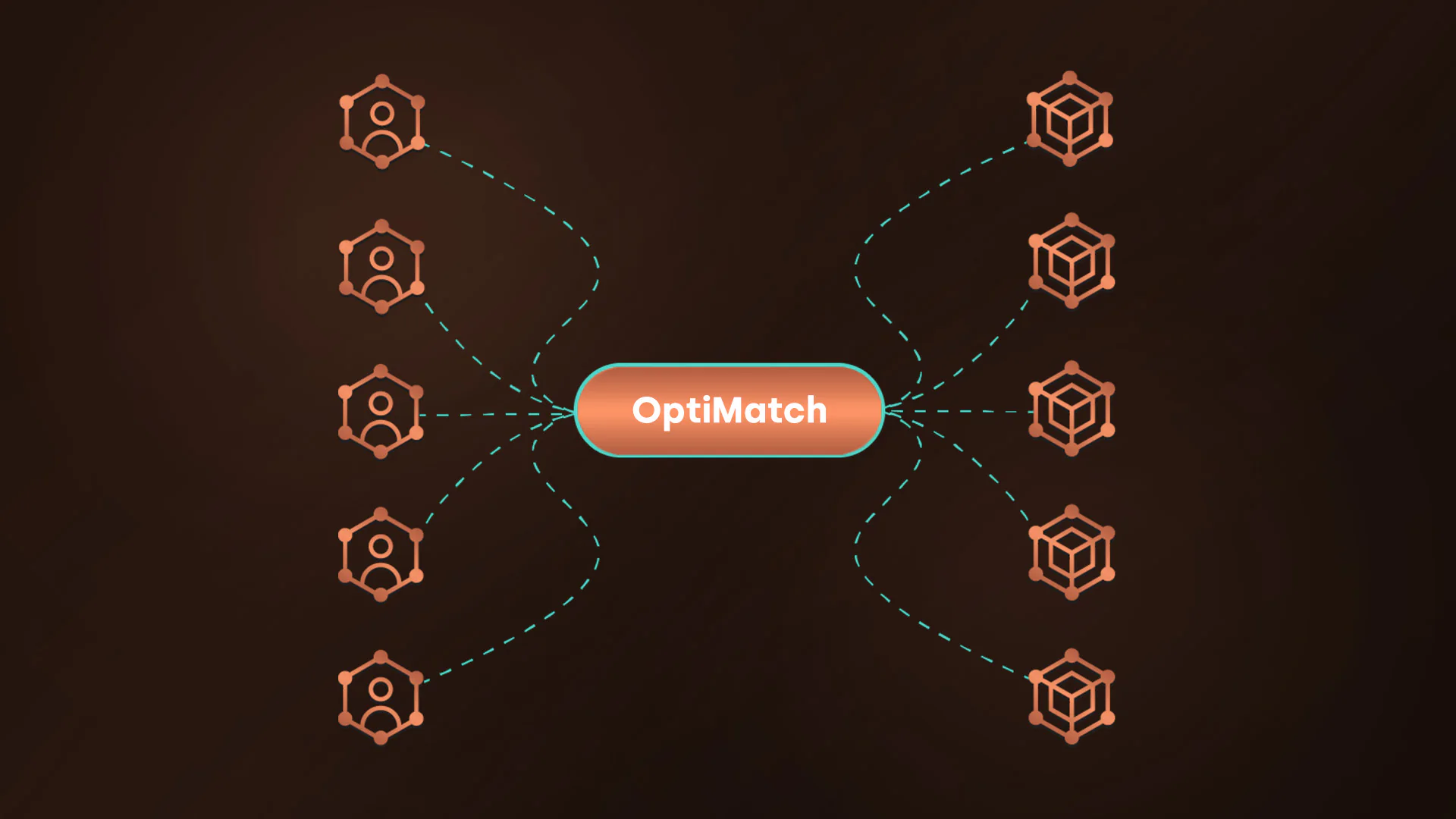
Instead of forcing planners to choose between business objectives and driver preferences, OptiMatch balances both:
- Configurable Objectives – Companies can weigh multiple priorities—cost, utilization, miles, dwell time, home time—into a single optimization model. These configurations exist in Minion, allowing OptiMatch to perform as you need when you need. No more trade-offs hidden in spreadsheets or static optimization solutions.
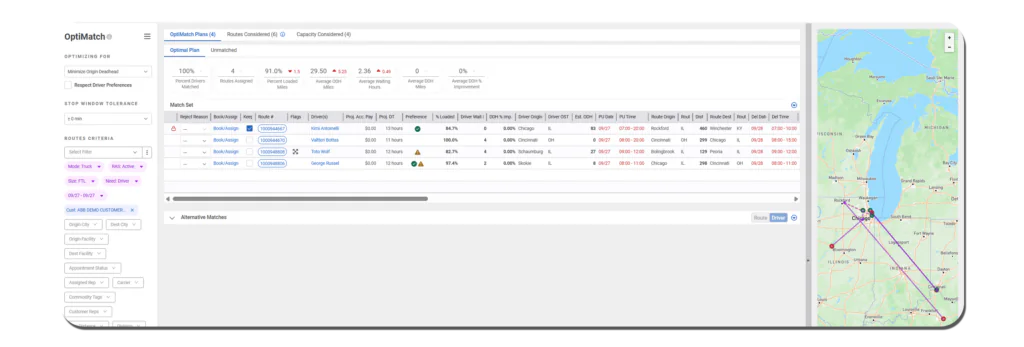
- Driver-Centric Context – Every plan includes details about driver availability, upcoming events, and driver preferences, including approved commodities to haul, regional or lane limitations, and any denied execution. Planners see not just what route works, but why.
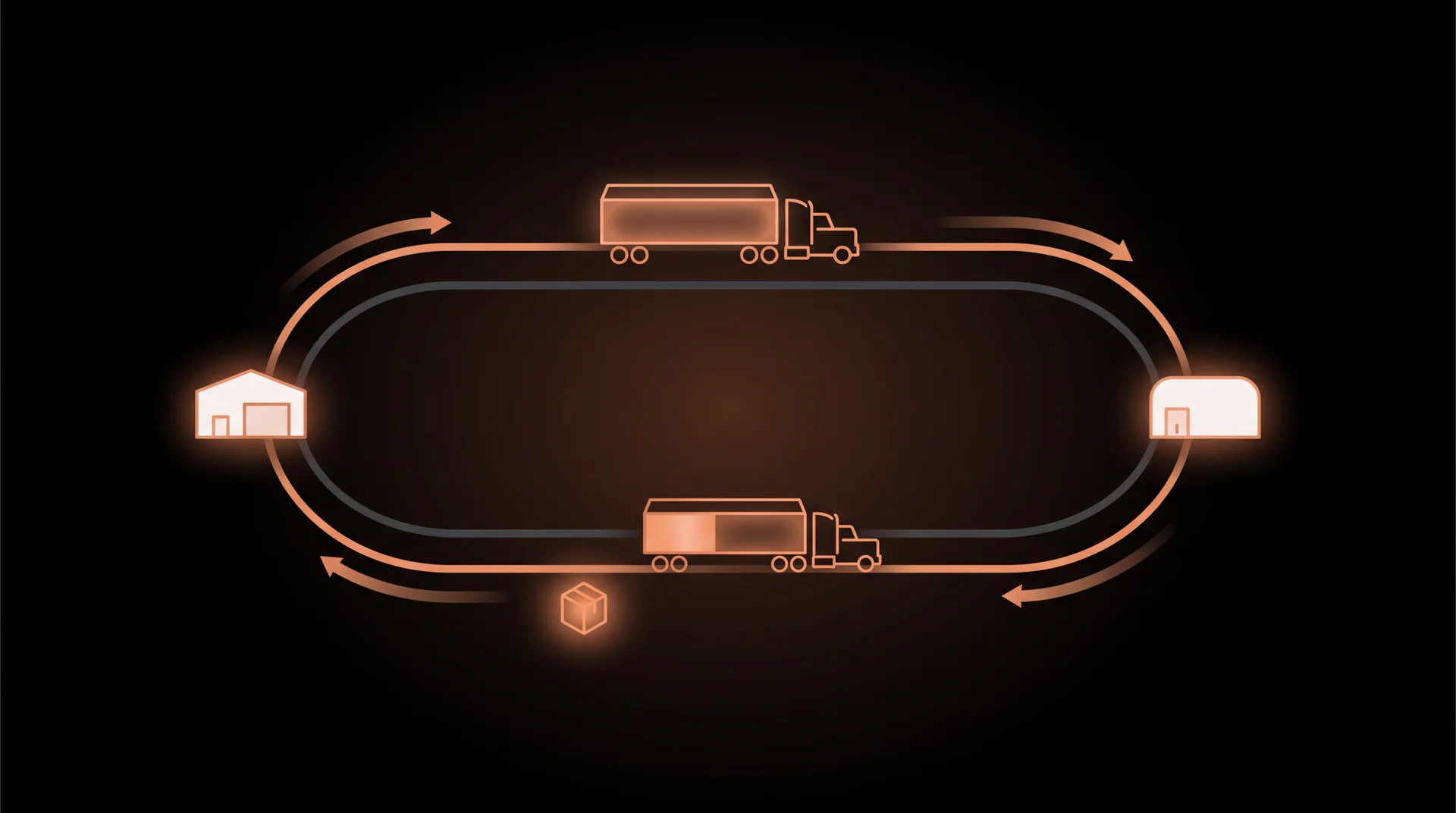
- Continous Move Planning – Rather than recommending a single “best next” trip, OptiMatch builds plans across a driver’s full availability, creating continuity instead of one-off assignments.
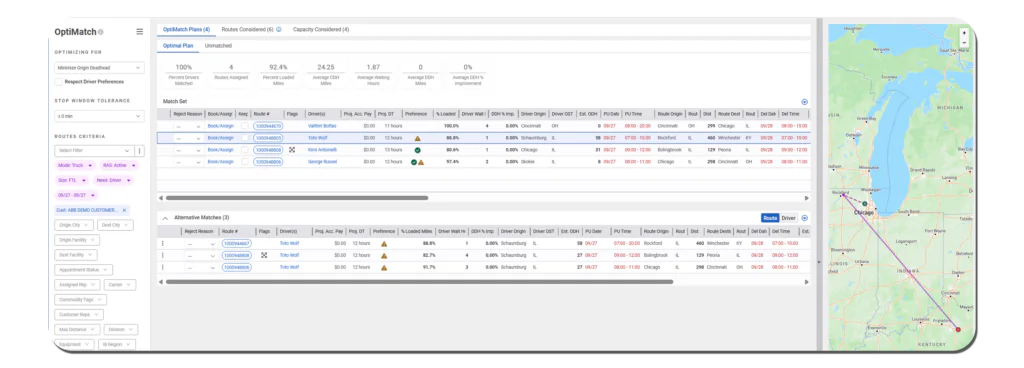
- Impact Visibility – When planners consider alternatives, OptiMatch instantly shows how those decisions affect the overall plan’s objectives.
The result? A system that enhances human judgment rather than replaces it. Planners stay in control, but now they have data-driven confidence behind every choice.
Why This Matters for Managers
For fleet and operations managers, driver churn is one of the most expensive line items. Recruiting, onboarding, and training each new driver costs thousands of dollars. Attrition also eats away at culture and service reliability.
By respecting preferences and building transparency into the planning process, OptiMatch directly improves satisfaction and retention. That means fewer empty seats, lower training costs, and better ROI on recruiting investments.
And because OptiMatch is easily configurable, managers can align planning rules with broader business goals, whether that’s cutting cost-per-mile, reducing deadhead, or increasing utilization.
Why This Matters for Planners
Planners live in a world of constant trade-offs. One bad assignment can spark a heated phone call or a missed delivery. Too often, they’re forced to rely on instinct and memory, with little context to back up their decisions.
OptiMatch gives planners a clear, transparent view of both the optimization model and the driver context behind each plan. They can generate optimized continuous moves in seconds instead of hours, then communicate those plans to drivers with confidence.
This not only reduces the stress of “flying blind” but also strengthens planner-driver relationships by making conversations more collaborative and informed.
What Makes OptiMatch Unique
Plenty of tools claim to optimize. But most stop short of what planners really need:
- They optimize for a single trip, ignoring broader driver availability.
- They present a “black box” solution without showing the why behind it.
- They neglect the human element–preferences, home time, commitment–that drives retention.
- The optimizations do not put the user in control and are limited in their ability to perform ad-hoc optimization planning.
OptiMatch goes further. It combines optimization with context, providing plans that are complete, configurable, and collaborative. Planners don’t just get an answer, they get options they can explain, share, and refine.
And because OptiMatch is part of MasterMind®, the industry’s first cloud-native, API-first TMS, it plugs directly into broader workflows like dispatch, driver management, customer commitments, and driver pay, without the silos or bolt on modules that plague legacy systems.
Change Management: Designed for Adoption
We know adopting new planning tools can be daunting. That’s why OptiMatch was designed to fit seamlessly into existing MasterMind workflows:
- Quick Setup – Optimization objectives can be configured in minutes.
- Intuitive Experience – Planners see their drivers, routes, and context on one screen.
- Optional Enrichment – Adding driver preferences makes plans richer, but it isn’t required to get started.
This means organizations can start small, prove value, and expand over time without overwhelming teams or disrupting operations.
The ROI: Fewer Empty Miles, Happier Drivers, Healthier Margins
The benefits of Optimatch are clear and immediate:
- Operational Efficiency – Faster planning cycles, less time spent firefighting.
- Driver Retention – Plans that align with preferences keep drivers satisfied and reduce costly churn.
- Financial Performance – Fewer empty miles and more efficient utilization translate into stronger margins.
When you connect the human factor with optimization science, everyone wins.
The Future of Planning
OptiMatch just scratches the surface of how we are rethinking planning and optimization. Soon we are expanding driver-to-route planning to include equipment planning (factoring in what assets are available, where they can be picked up or dropped off, and how they fit into network balance).
Long term, OptiMatch will embed into every assignment workflow in MasterMind, powering decisions across modes and divisions. Wherever you plan freight, OptiMatch will ensure those decisions are optimized, contextual, and collaborative.
See OptiMatch in Action
The best way to understand OptiMatch is to see it for yourself. Contact us today to see a free demo and discover how balanced planning can drive efficiency, retention, and profitability for your operation.
FAQs
Frequently asked questions
- What is OptiMatch and what problem does it solve for fleet planners?
OptiMatch is MasterMind’s embedded driver planning tool that balances business objectives — like reducing empty miles and maximizing utilization — with driver preferences like home time and lane restrictions. It replaces spreadsheets and tribal knowledge with structured, data-driven planning that scales across hundreds of drivers and thousands of routes.
- How does OptiMatch factor in driver preferences during route planning?
OptiMatch includes driver-centric context in every plan — covering approved commodities, regional or lane limitations, home time commitments, upcoming events, and denied executions. Planners see not just which route works, but why it’s the right fit for that specific driver.
- What is continuous move planning in OptiMatch?
Instead of recommending a single “best next” trip, OptiMatch builds plans across a driver’s full availability window — creating a sequence of continuous moves rather than isolated, one-off assignments. This improves utilization and reduces the gaps that lead to empty miles.
- Does OptiMatch make decisions automatically or do planners stay in control?
Planners stay fully in control. OptiMatch presents an optimized plan along with alternate options and shows the impact of any changes on overall objectives — so every decision is informed and explainable, not handed off to a black box.
- How does OptiMatch help reduce driver turnover?
By building plans that respect driver preferences, home time, and real-world constraints, OptiMatch increases driver satisfaction and reduces the frustration that leads to churn — directly lowering the recruiting, onboarding, and training costs that come with high turnover.
- How quickly can a fleet get started with OptiMatch?
OptiMatch is designed for fast adoption. Optimization objectives can be configured in minutes, and adding driver preferences enriches plans but isn’t required to get started. Teams can begin with core functionality and expand usage as they see results.